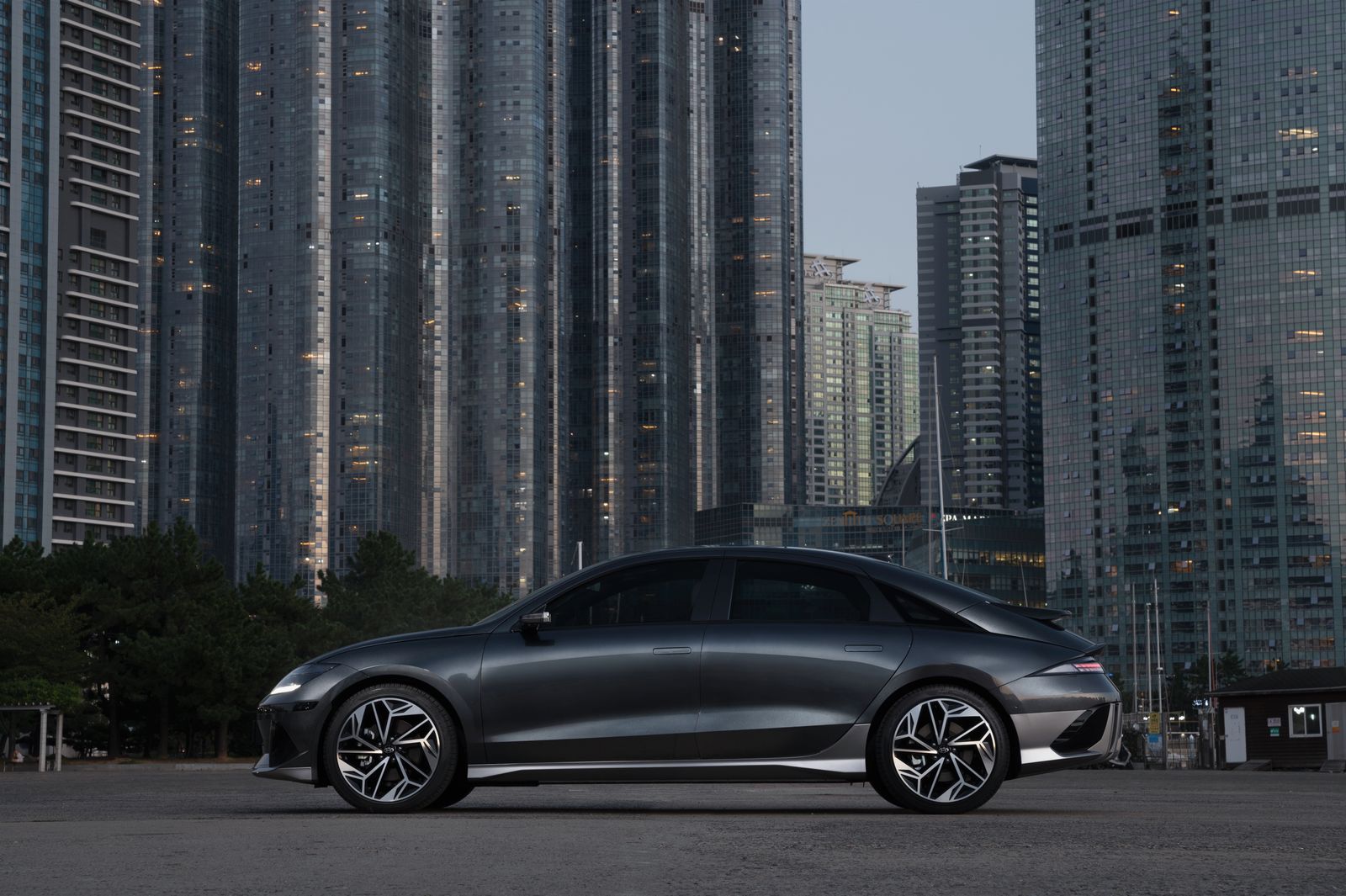
The Hyundai Ioniq 5 arrived looking like nothing else on the road — a sharp, retro-futuristic crossover built on Hyundai's dedicated EV platform. But it's the engineering underneath, not just the styling, that has made it a benchmark. This is the EV we point friends to when they ask for "the best one, full stop."
800-volt fast charging
The Ioniq 5's headline feature is its 800-volt electrical architecture, which lets it accept very high charging rates at compatible DC fast chargers. In practice, that means dramatically shorter stops on road trips — often going from 10% to 80% faster than many rivals. For context on how this compares, see our EV charging time guide.
Interior and space
Inside, the Ioniq 5 feels bigger than its footprint. The flat floor opens up legroom, and the sliding center console adds flexibility. Materials are a clear step above the minimalist Tesla approach, and the cabin is notably quiet at highway speed.
Driving experience
The ride is the Ioniq 5's other strength: it's tuned for comfort rather than sportiness, soaking up rough pavement far better than a Model 3. It's not the sharpest handler in the segment, but for daily commuting and family duty, comfort wins.
How it compares
Stacked against the Tesla Model Y, the Ioniq 5 charges faster at its best and rides more comfortably, while the Model Y counters with greater efficiency and Supercharger access. We broke it down in Model Y vs Ioniq 5.
The verdict
If you want an electric SUV that's fast to charge, comfortable to drive, and spacious inside — without the quirks of Tesla's minimalist cabin — the Ioniq 5 is the pick. Pair it with a home Level 2 charger and it's about as complete a package as you can buy today.